
Contemporary risks are increasingly complex and interdependent, reflecting a global reliance on tightly coupled socio-technical systems. Recent events illustrate how vulnerabilities in just-in-time supply chains and insufficient system resilience (e.g., lack of modularity and redundancy) can precipitate widespread disruptions. Notably, global impacts do not require large-scale shocks; disturbances within interconnected systems can escalate rapidly and cascade through systems, crossing sectoral and geographical boundaries.
Systemic risk assessment offers a critical framework for mapping these interdependencies, understanding their dynamics, identifying leverage points, and informing interventions that enhance resilience and reduce cascading failures. However, this raises pressing analytical, policy and governance questions. This working group seeks to advance systemic risk scholarship and practice.
Meet the team!

Lara Mani
Assistant Research Professor at the Centre for the Study of Existential Risk (CSER)
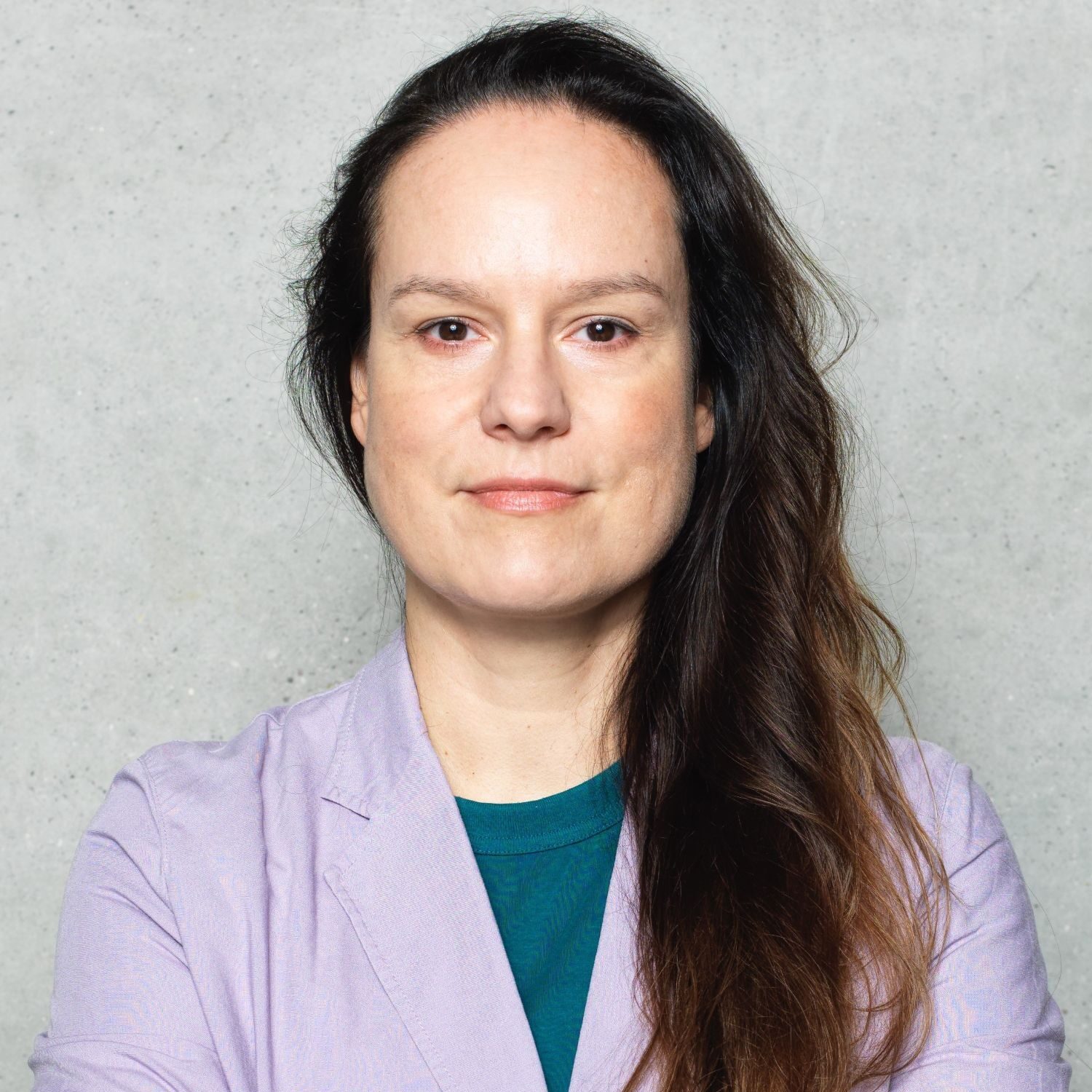
Pia-Johanna Schweizer
Dr. Pia-Johanna Schweizer leads the Research Group Systemic Risks at the Research Institute for Sustainability (RIFS) at the GFZ Helmholtz Centre for Geosciences, Germany. A sociologist by training, her research focuses on systemic risk, risk governance, and deliberative decision-making under conditions of uncertainty and ambiguity. She also investigates approaches to support decision-making in disaster risk management and aims to improve multi-level governance through enhanced engagement, communication, and risk management.
Her work spans multiple world regions and hazard types, including seismic events, floods, droughts, and climate-related risks, addressing citizens, stakeholders and decision-makers from municipalities to national and international agencies. Her current research centres on the propagation of systemic risks in society, multi-hazard/multi-risk phenomena, and strengthening risk governance. Through interdisciplinary and transdisciplinary collaboration with partners from science, policy, business, and civil society, her work informs governance strategies and policy recommendations for managing systemic risk in complex, interconnected systems.
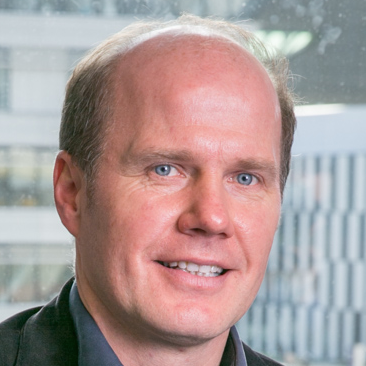
Reinhard Mechler
Reinhard Mechler has more than 25 years of experience with analysing and addressing socio-economic aspects of disaster and climate change risks. He provides evidence-based advice to a wide range of public and private sector stakeholders in order to improve resilience-focussed decision-making on disaster, climate and other risks. As the head of the ‘Systemic Risk and Resilience’ Group at the International Institute for Applied Systems Analysis (IIASA), he currently leads a team of about 25 economists, political scientists, geographers, sociologists, ecologists and mathematicians. He is a visiting professor at the University of Oviedo and has been a visiting professor at the University of Graz, as well as a senior lecturer at the University for Economics and Business in Vienna. Reinhard has acted as a lead author on IPCC’s special report on adaptation to extreme events (SREX), the 5th assessment report, the report on 1.5° C global warming and the 6th assessment report.

Sirkku Juhola
Sirkku Juhola has a PhD and a MSc from the University of East Anglia, and a BA from the University of Sussex, both in the United Kingdom. Currently a Professor at the University of Helsinki, she has held multiple visiting and research positions withinNordic institutions and the United Nations University. Her research focuses on climate change governance, urban adaptation, and the climate-biodiversity nexus. She leads and participates in several European and Nordic projects funded by Horizon Europe, FORMAS, and the Research Council of Finland. Sirkku Juhola serves as editor in chief and deputy editor for leading journals including PLOS Climate, Global Sustainability and Ecological Economics. She has contributed to IPCC reports and held leadership positions in Future Earth and the national climate panels of Finland that advices the Finnish Government on climate policy.
Working Group Updates
Upcoming events
Stay tuned — new events will be announced soon.